
Solar, storage and hybrid plants for industry, with the switchboards built in our own works.
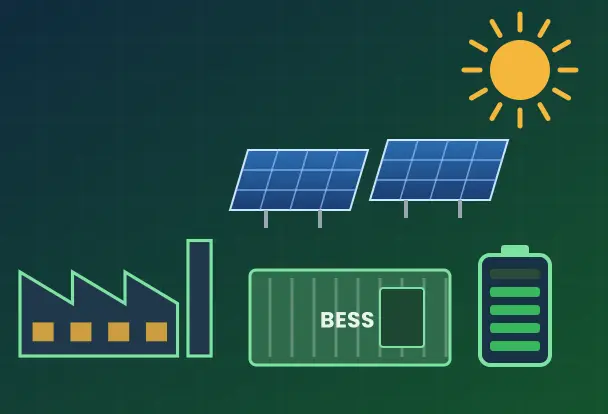

Free tool for plants that need backup on a critical bus
Battery (BESS) sizing calculator
Enter the load you must keep running and for how long. See the usable and nameplate energy, the PCS rating, how many standard cabinets or containers that is, the floor space with clearances, and the indicative capex. Runs in your browser; nothing is uploaded.
This calculator needs JavaScript. If nothing appears below, enable JavaScript or send us your bill and we will run the numbers for you.
Fill in the required figures to begin.
The headline numbers are free. The full breakdown, sizing and payback are emailed to you and unlocked here once you verify your work email.
One-time code to your email, nothing else. We do not share your details.
Usable energy is the load multiplied by the hours it must run. The nameplate battery is larger, because you do not discharge LFP below about ten per cent and the inverter loses about five per cent. The PCS is rated to the load with headroom for motor starting; a direct-on-line motor draws six times its rating for a second, and a grid-forming PCS must ride that.
We build from two standard systems: cabinets of about 250 kW and 500 kWh for smaller plants, and 20-foot containers of 1 MW and 2 MWh for larger ones. The calculator shows how many of each your number maps to; a mix is often cheaper, and the feasibility study settles it.
The area shown includes NFPA 855 clearances around containers and room for the PCS and switchboard. Recharge time sets how much of your contract demand the battery borrows while charging; a six-hour recharge after a two-hour discharge needs a third of the discharge power.
Only the part that costs you money when it stops: process, controls, safety and lighting. Shedding utilities such as HVAC and compressors during an outage roughly halves the battery, and the EMS does the shedding automatically.
Long enough to ride through most outages and let the DG start for the rare long one. Two hours covers the large majority of grid trips in Gujarat industrial estates; four hours is rarely worth the extra battery.
Enter the largest motor you start direct-on-line while on battery. The PCS is sized with headroom for it; soft starters or VFDs on big motors reduce that headroom and the cost.
Enter your monthly electricity bill and see where the money goes, in two minutes.
Solar, storage and hybrid plants for industry, with the switchboards built in our own works.
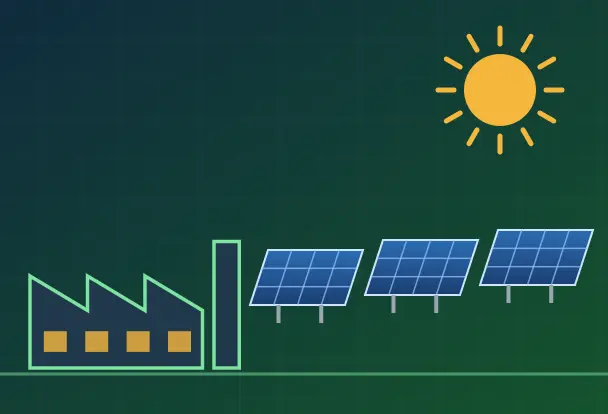
Captive rooftop and ground-mount solar with the electrical side engineered in-house.
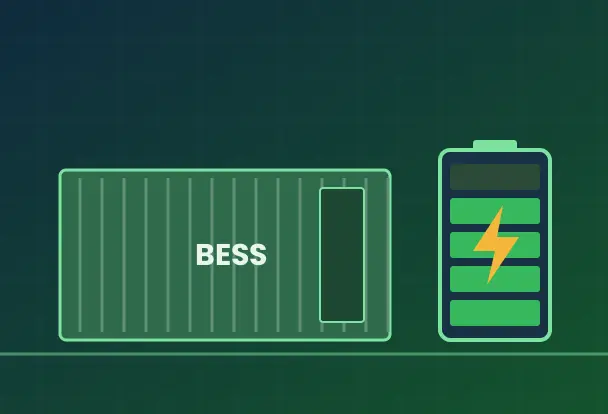
Storage that holds your plant up when the grid drops and trims demand charges.
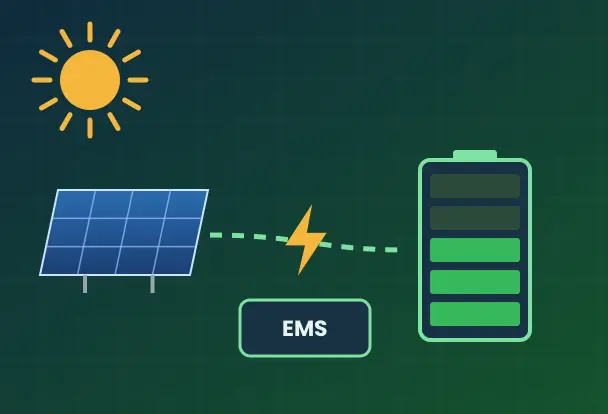
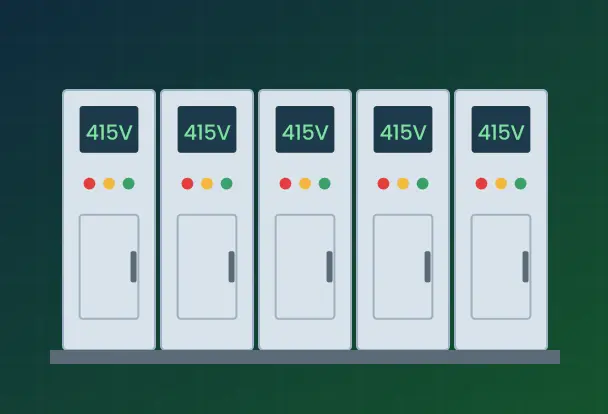
LT switchboards, ACDB, DCDB and protection built and tested in Vadodara.
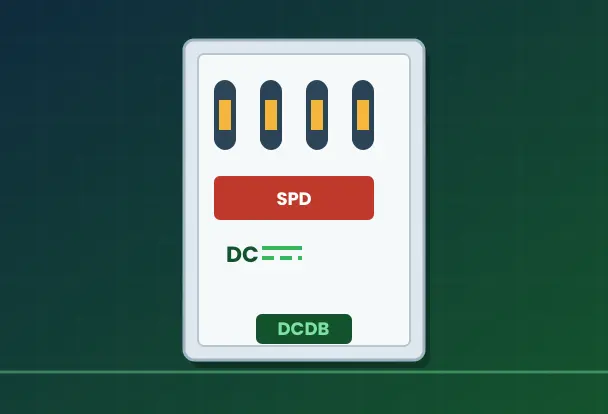
AC and DC distribution boards for solar plants, from our Vadodara works.