
Solar, storage and hybrid plants for industry, with the switchboards built in our own works.
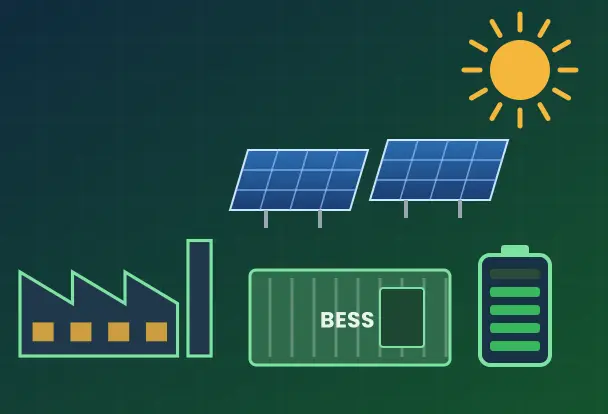

Free tool for plants in Gujarat
Solar generation estimator for Gujarat
Pick your district, enter roof or land area or the solar size you have in mind, and your tariff. See the kWp that fits, the units it generates in year one and over 25 years, the saving, and the carbon avoided. Runs in your browser; nothing is uploaded.
This calculator needs JavaScript. If nothing appears below, enable JavaScript or send us your bill and we will run the numbers for you.
Fill in the required figures to begin.
The headline numbers are free. The full breakdown, sizing and payback are emailed to you and unlocked here once you verify your work email.
One-time code to your email, nothing else. We do not share your details.
The yields are indicative P50 values for a well-oriented, unshaded rooftop in each district, drawn from the solar resource and typical plant performance across Gujarat. Kutch and Saurashtra see the best resource; south Gujarat loses some to monsoon cloud. A yield study for your actual roof replaces these in the feasibility study.
About 100 square feet per kWp on an industrial shed, allowing for walkways and shading between rows. East-west sheds pack more panels per square foot but generate a little less per kWp; the orientation factor accounts for it.
Modules lose about half a per cent of output a year, and the warranty guarantees most of the original output at year 25. The 25-year total applies that degradation. Savings assume today's tariff with no escalation, which is conservative.
Within about ten per cent for a well-oriented, unshaded roof. Shading, tilt, soiling and the inverter sizing ratio move the real figure, which is why the feasibility study runs a yield simulation for your roof before we quote.
Yes, slightly less per kWp than south-facing, but it spreads generation across the day and fits more panels on the same roof. For a plant with steady daytime load it is often the better layout.
The CEA publishes a weighted average grid emission factor each year, around 0.7 kg CO2 per unit. Use the figure from the latest CEA database for formal BRSR or ESG reporting; the default here is indicative.
Enter your monthly electricity bill and see where the money goes, in two minutes.
Solar, storage and hybrid plants for industry, with the switchboards built in our own works.
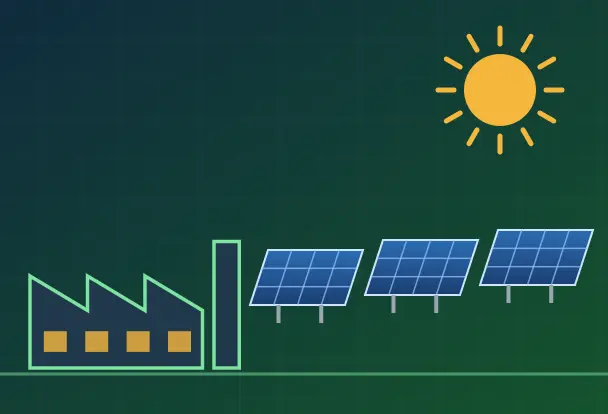
Captive rooftop and ground-mount solar with the electrical side engineered in-house.
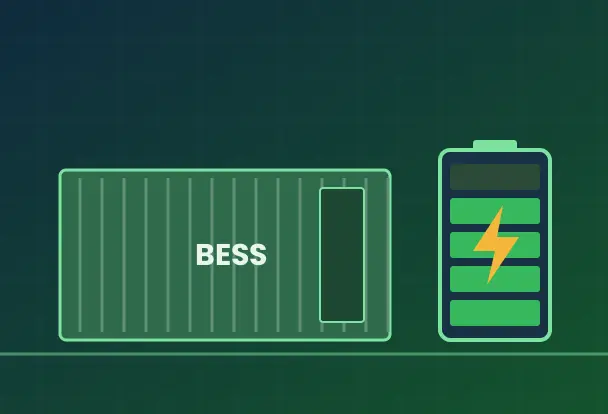
Storage that holds your plant up when the grid drops and trims demand charges.
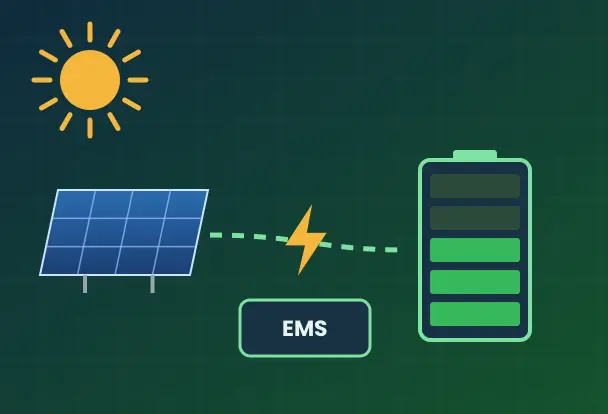
LT switchboards, ACDB, DCDB and protection built and tested in Vadodara.
AC and DC distribution boards for solar plants, from our Vadodara works.