
Solar, storage and hybrid plants for industry, with the switchboards built in our own works.
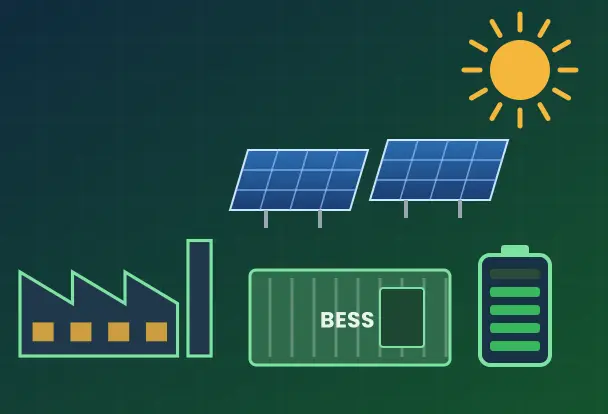

Free tool for HT industrial consumers
Demand charge calculator
Enter your contract demand, the maximum demand recorded on your bill and the demand charge rate. See what the DISCOM bills you for demand today, how much a battery that shaves your peak would save every month, the storage size it takes, and the payback on demand charges alone. Runs in your browser; nothing is uploaded.
This calculator needs JavaScript. If nothing appears below, enable JavaScript or send us your bill and we will run the numbers for you.
Enter the maximum demand and the demand charge rate to begin.
The headline numbers are free. The full breakdown, sizing and payback are emailed to you and unlocked here once you verify your work email.
One-time code to your email, nothing else. We do not share your details.
The DISCOM records your kVA in every 15 or 30-minute window of the month and bills the highest one, whether you drew it for one window or every day. On Gujarat HT tariffs there is also a floor: you pay for at least a set share of your contract demand even if you never reached it, and anything above contract demand is billed at a penalty rate.
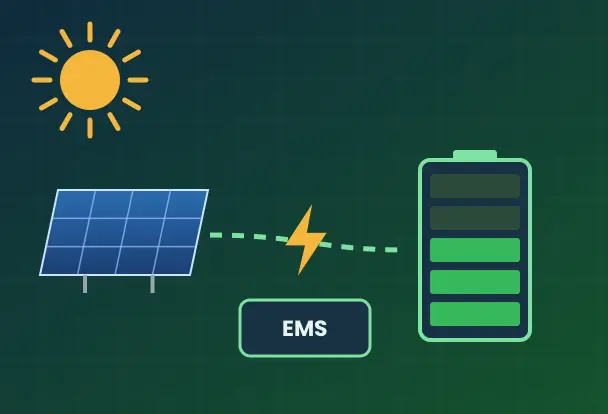
The EMS watches your import. When it approaches the target, the battery discharges to cover the difference, so the meter never records the peak. The battery recharges once the peak passes, usually overnight at the cheapest tariff or from solar surplus at midday. The DISCOM sees a flatter plant, and the demand charge falls every month, whether or not the grid ever trips.
The feasibility study replaces the hours and percentages with a twelve-month load profile and sizes the battery to it.
Because of the billing floor. Gujarat HT tariffs bill at least a fixed share of contract demand, typically 85 per cent, even in a month when you drew less. If that happens often, the contract demand is too high and should be revised.
If your recorded demand is consistently well below contract, yes, and the calculator flags it. A battery is for the opposite case: recorded demand near or above contract because of short peaks that are expensive to pay for all month.
Usually smaller than people expect. A 1,500 kVA plant shaving 20 per cent for a two-hour peak needs roughly 300 kW and 700 kWh, which is a single containerised system. The same battery then replaces DG running and rides through trips at no extra capex.
Enter your monthly electricity bill and see where the money goes, in two minutes.
Solar, storage and hybrid plants for industry, with the switchboards built in our own works.

Captive rooftop and ground-mount solar with the electrical side engineered in-house.
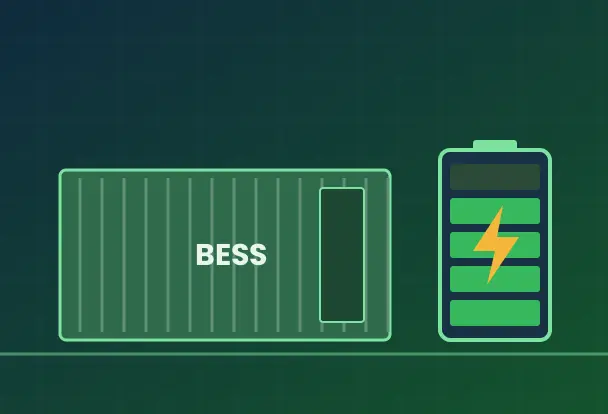
Storage that holds your plant up when the grid drops and trims demand charges.
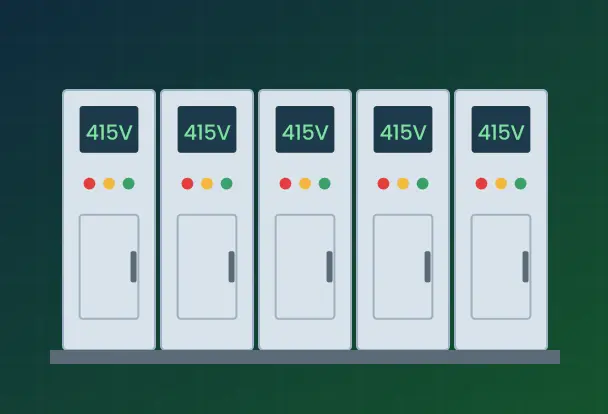
LT switchboards, ACDB, DCDB and protection built and tested in Vadodara.
AC and DC distribution boards for solar plants, from our Vadodara works.