
Solar, storage and hybrid plants for industry, with the switchboards built in our own works.
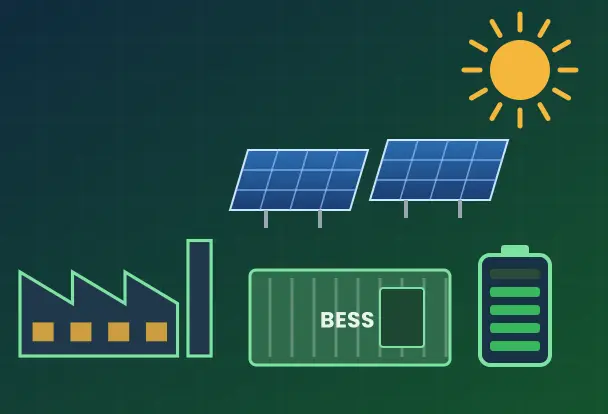

Free tool for switchboard specification
Fault level and switchboard rating calculator
Enter your transformer rating and impedance. See the prospective short-circuit current at the LT bus, the peak current, the short-time withstand rating to specify for the switchboard, and the breaking capacity to specify for the breakers. Runs in your browser; nothing is uploaded.
This calculator needs JavaScript. If nothing appears below, enable JavaScript or send us your bill and we will run the numbers for you.
Fill in the required figures to begin.
The headline numbers are free. The full breakdown, sizing and payback are emailed to you and unlocked here once you verify your work email.
One-time code to your email, nothing else. We do not share your details.
For a bolted three-phase fault at the LT bus the current is roughly the transformer full-load current divided by its per-unit impedance: a 2,000 kVA transformer at 5 per cent gives about 55 kA at 415 V. The source impedance on the HT side and the cable to the switchboard both reduce it a little, and the calculator includes both. Transformers in parallel add their contributions.
The switchboard needs a short-time withstand current, Icw, at or above the prospective fault current for one second, and a peak withstand, Ipk, for the first half cycle. The breakers need a breaking capacity, Icu, at or above the fault current. Standard switchboard ratings are 25, 36, 50, 65, 80 and 100 kA; the calculator rounds up to the next one.
Inverters contribute a small fault current, typically 1.1 to 1.5 times their rated current, for a few cycles. On a large hybrid plant that is a few kA on top of the transformer's contribution and is included in the protection study.
Indicative only. The switchboard's actual Icw and Ipk are stated on the design verification certificate of the busbar system for the specific build; we do not state a rating here that the verified design does not back.
Low-impedance transformers and short cable runs give high fault levels. A 4 per cent transformer gives a quarter more fault current than a 5 per cent one of the same rating. Parallel transformers add up.
Not safely. The switchboard must withstand the fault current the system can deliver. Where the calculated level sits just above a standard rating, a slightly higher-impedance transformer or current-limiting breakers are the usual answers.
No. Ratings come from the verified busbar system's documentation for each specific design, which we supply with the drawings. This calculator tells you what to ask for.
Enter your monthly electricity bill and see where the money goes, in two minutes.
Solar, storage and hybrid plants for industry, with the switchboards built in our own works.
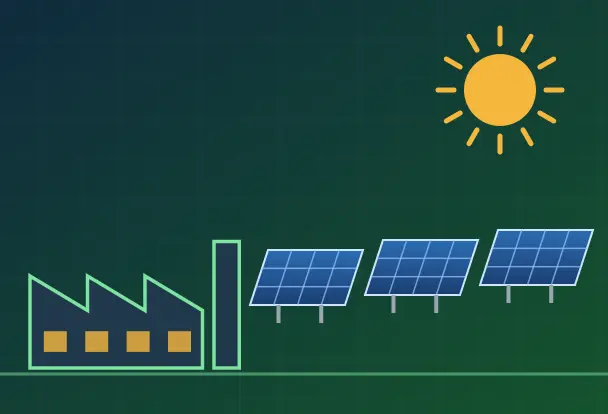
Captive rooftop and ground-mount solar with the electrical side engineered in-house.
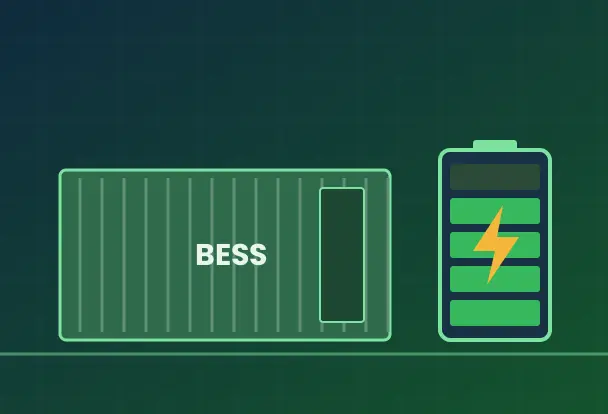
Storage that holds your plant up when the grid drops and trims demand charges.
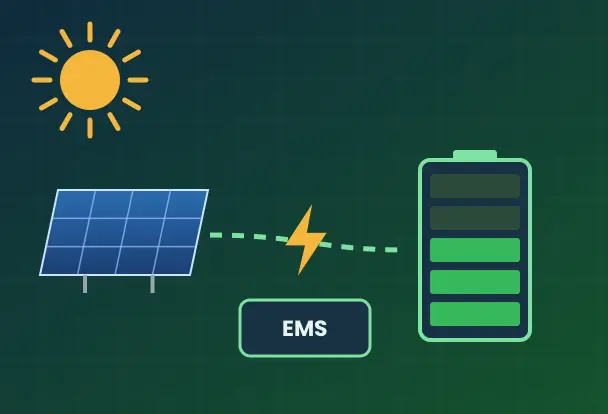
LT switchboards, ACDB, DCDB and protection built and tested in Vadodara.
AC and DC distribution boards for solar plants, from our Vadodara works.