
Solar, storage and hybrid plants for industry, with the switchboards built in our own works.

Free tool for panel and plant engineers
LT cable size and breaker calculator
Enter the load, length and material. See the full-load current, the next standard breaker, the cable size that carries the current and keeps voltage drop inside your limit, the actual drop, and whether parallel runs are needed. Runs in your browser; nothing is uploaded.
This calculator needs JavaScript. If nothing appears below, enable JavaScript or send us your bill and we will run the numbers for you.
Fill in the required figures to begin.
The headline numbers are free. The full breakdown, sizing and payback are emailed to you and unlocked here once you verify your work email.
One-time code to your email, nothing else. We do not share your details.
Full-load current is power divided by root three times voltage times power factor. The installation derating factor accounts for grouping, ambient temperature and laying method; the cable must carry the design current after derating. The breaker is the next standard rating above the load current, and the cable must also be rated above the breaker.
Long runs fail on voltage drop before they fail on current. The calculator computes the drop at full load from the conductor resistance and reactance over the route length and sizes up until the drop is inside your limit, three per cent for most plant feeders, five per cent at the far end of the installation.
Above about 400 square millimetres a single core becomes impractical to terminate and bend, so the calculator splits the load across parallel runs of equal size and length. Each run needs its own gland and termination on the panel, which is why feeder count matters in the panel design.
Indicative values from typical manufacturer tables for XLPE armoured cables in air at 40 °C ambient; confirm against the cable maker's data and the installation conditions before ordering.
Aluminium for feeders above about 50 square millimetres where space and cost matter; copper where space is tight, runs are short, or vibration and repeated termination are expected. Both are available from the same panel.
Three per cent from the main switchboard to a motor control centre or distribution board, and up to five per cent total to the furthest load. Motors are sensitive to low voltage at starting, so keep motor feeders tighter.
The breaker protects the cable, so the cable must carry more than the breaker can let through continuously. The calculator sizes the cable above the breaker rating after derating, which is the normal selection rule.
Enter your monthly electricity bill and see where the money goes, in two minutes.
Solar, storage and hybrid plants for industry, with the switchboards built in our own works.
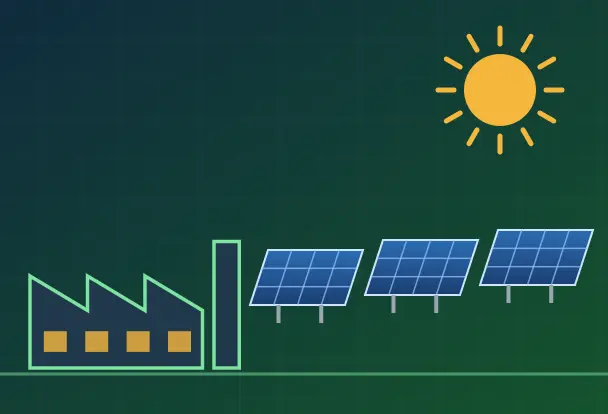
Captive rooftop and ground-mount solar with the electrical side engineered in-house.
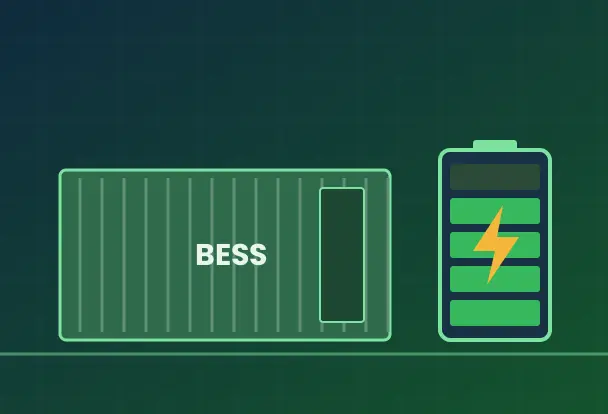
Storage that holds your plant up when the grid drops and trims demand charges.
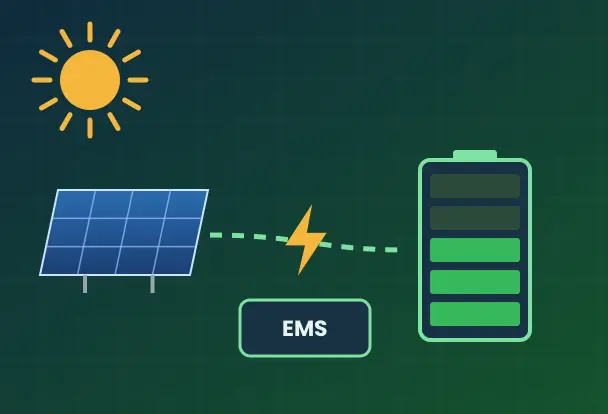
LT switchboards, ACDB, DCDB and protection built and tested in Vadodara.
AC and DC distribution boards for solar plants, from our Vadodara works.