
Solar, storage and hybrid plants for industry, with the switchboards built in our own works.
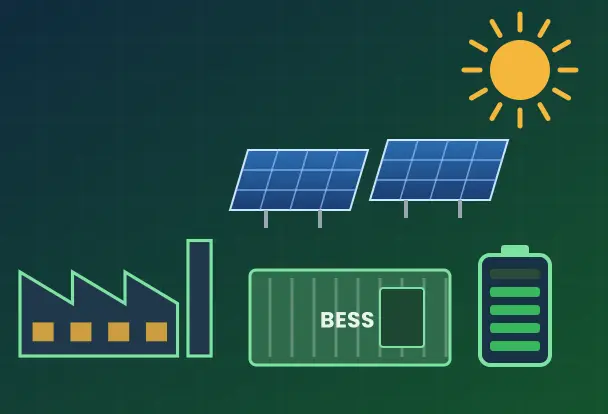

Free tool for HT consumers on ToD tariffs
Time-of-day tariff calculator
Enter your peak-hour and night-hour units and rates. See the spread a battery can earn by charging at night and discharging in the peak, the battery size that fits your peak units, and the payback from tariff shifting alone.
This calculator needs JavaScript. If nothing appears below, enable JavaScript or send us your bill and we will run the numbers for you.
Fill in the required figures to begin.
The headline numbers are free. The full breakdown, sizing and payback are emailed to you and unlocked here once you verify your work email.
One-time code to your email, nothing else. We do not share your details.
A ToD tariff charges more in the evening peak and less at night. A battery buys units at the night rate, loses about ten per cent in the round trip, and sells them to your own plant in the peak at the peak rate. The spread per unit is the peak rate minus the night rate grossed up for losses. On most Gujarat HT tariffs that spread is two to four rupees a unit.
Shifting alone pays back slowly, because the spread is small and the battery cycles once a day. It becomes attractive when the same battery also cuts demand charges and replaces DG hours, which is how we size storage. Use this tool to see the ToD contribution, then the demand charge and DG tools for the rest.
Rarely. A two to four rupee spread cycled once a day pays back in eight to twelve years. Add demand-charge reduction and DG replacement on the same battery and the combined payback is usually four to six years.
Yes, and it is better. Charging from midday solar surplus costs ₹2.5 to 3.5 a unit, less than the night rate, so the spread is larger. The payback estimator covers that case.
Enter the two that matter for the battery: the slab it charges in and the slab it discharges in. The normal slab in between does not change the result.
Enter your monthly electricity bill and see where the money goes, in two minutes.
Solar, storage and hybrid plants for industry, with the switchboards built in our own works.
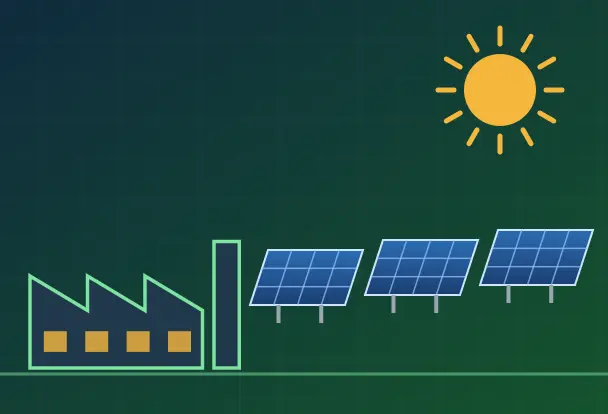
Captive rooftop and ground-mount solar with the electrical side engineered in-house.
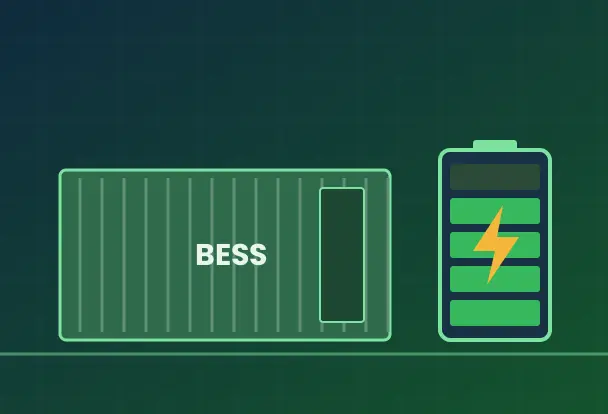
Storage that holds your plant up when the grid drops and trims demand charges.
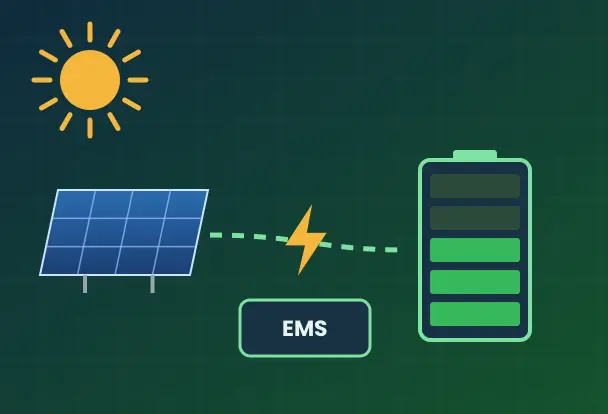
LT switchboards, ACDB, DCDB and protection built and tested in Vadodara.
AC and DC distribution boards for solar plants, from our Vadodara works.